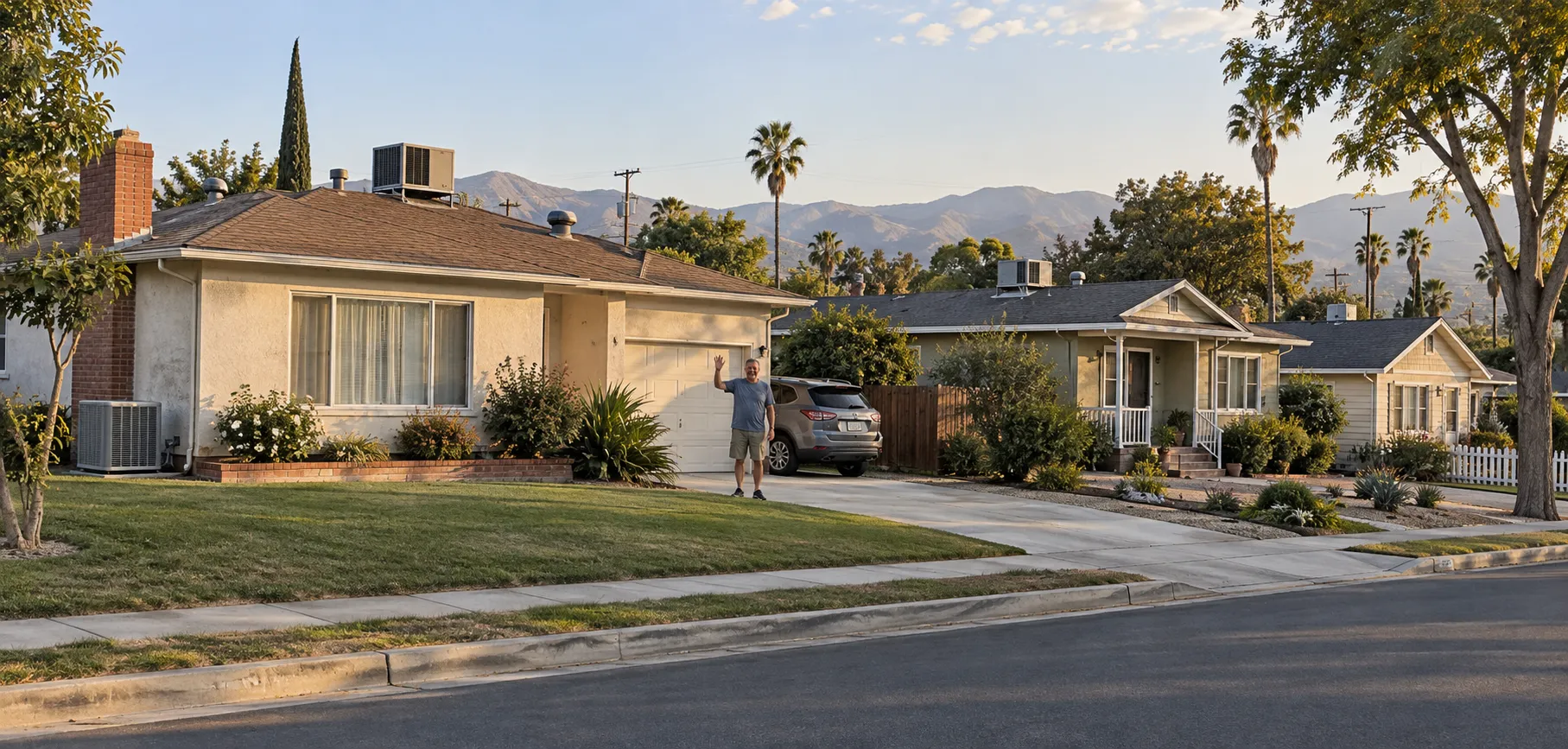
Need ac installation and replacement in Roseville?
Describe what your AC or furnace is doing and request an estimate. A local provider in our network can follow up. Request a callback to check provider availability.
No obligationRequest an estimate today
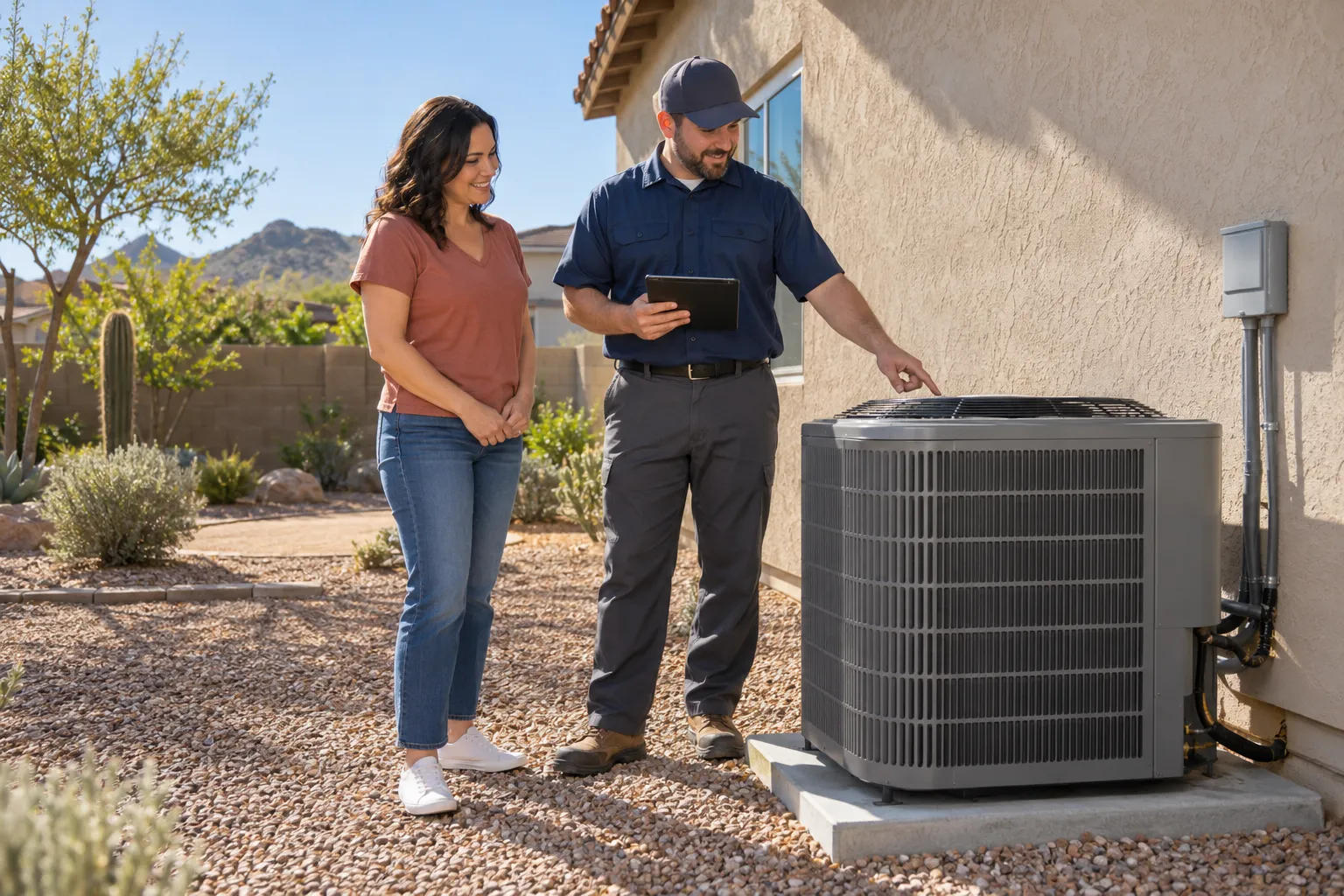
An aging air conditioner rarely fails at a convenient time. It loses strength slowly, runs longer, and then stops during the first real heat. Replacing it on your own schedule gives you room to compare options and prices.
Resourceshurt Heating & Air is a referral service. You send one request, and we connect you with an independent provider in our network who serves the Roseville area. The provider inspects your home, sizes the system, and gives you a written quote. The provider does the installation. Resourceshurt Heating & Air keeps the first step simple, so you spend less time searching and more time deciding. Plain terms, clear steps.
Start with facts. A system that is only struggling gives you time to compare options. A system that dies in a heat wave leaves you rushed. Small problem first.
A provider can inspect the unit and tell you which path fits. If the unit is young and the fault is minor, repair usually wins. If it is old and failing, replacement may cost less over time.
Look for these:
One sign alone is not a verdict. Two or three together usually mean it is time to request an estimate.
Timing changes the outcome. Here is the usual path.
Long dry seasons and wildfire smoke add strain. Dust and smoke clog filters and coils, so the unit works harder. Replacing in a calmer month gives you time to compare quotes.
Terms are explained once here, then used plainly.
The right fit depends on your ducts, your space, and your budget.
Size is measured in tons. A ton is a set amount of heat moved out of the house each hour. Too small, and the system runs all day. Too large, and it switches on and off, cools fast, and leaves the air damp.
A careful provider calculates the load. That means checking floor area, insulation, windows, sun exposure, and ducts. Many stucco ranch homes and 1950s to 1980s tract homes have had changes since they were built, such as added rooms or new windows. The old unit's size may no longer fit. Do not accept "same size as before" without a check.
Ask the provider to list the scope in writing.
The indoor and outdoor parts must be rated to work together. A mismatched pair loses efficiency and can shorten the system's life.
Ducts matter as much as the unit. Leaky or undersized ducts waste cooled air. Homes on slabs often have ducts in the attic. Homes on raised foundations may have them under the floor. Each layout changes access and labor.
Climate counts too. Mild coastal weather often needs a smaller system than hot inland areas.
The SEER2 rating shows how much cooling a system delivers per unit of energy over a season. A higher number means lower running costs. It also means a higher purchase price.
Where cooling season is long, a higher rating pays back faster. Where summers are mild, a mid-range unit may be enough. Ask the provider to compare the price gap with the expected yearly savings.
Variable-speed models run longer at lower power. They are quieter and hold a steadier temperature. Ask about utility rebates too. Availability varies.
Compare at least two written quotes before you decide.
Resourceshurt Heating & Air does not install systems. It links you with an independent provider in the network. Request, then connect. Describe your home and your cooling problem, and a local provider follows up with next steps.
If your AC has already failed in a heat wave, Request a callback to check provider availability. Emergency AC repair may be the first step, and a replacement plan can follow once the house is cool again.
The provider checks your home, current unit, ducts, and electrical setup before recommending any new system.
Square footage, windows, insulation, and sun exposure set the tonnage your home actually needs.
The old unit is taken out and the new indoor and outdoor parts are placed and connected.
Airflow, refrigerant charge, and thermostat settings are checked before the job is complete.
Prices vary by home, system type, and duct condition. These are typical U.S. ranges, not quotes. Ask each provider for a written quote that lists equipment, labor, and extras.
| Item | Typical range | Notes |
|---|---|---|
| Central AC replacement | $5,000 – $12,000 | Depends on tonnage, brand, and efficiency rating |
| Heat pump system | $6,000 – $14,000 | Cools and heats; often paired with an air handler |
| Ductless mini-split (single zone) | $3,000 – $7,000 | Price rises with each added indoor unit |
| Duct repair or sealing | $500 – $2,500 | Needed more often in older homes |
| Thermostat upgrade | $150 – $600 | Smart models cost more to install |
| Permit and disposal | $100 – $800 | Rules and fees differ by local area |
Tell us about your home, your current AC, and the problem you are seeing.
Resourceshurt Heating & Air connects you with an independent provider serving your area.
The provider inspects, sizes the system, and puts the scope and price in writing.
Choose your provider and a date that works. The provider handles the install.
Send a single request instead of searching and comparing providers on your own.
Sizing, ratings, and system types are explained in simple language.
Local providers in the network do the work and set their own quotes.
Request an estimate with no obligation, and decide at your own pace.
Describe what your AC or furnace is doing and request an estimate. A local provider in our network can follow up. Request a callback to check provider availability.
No obligationAge, repair history, and the type of fault decide it. A unit over 12 years old with repeated repairs often points toward replacement.
Many replacements take one to two days, but time varies. Ductwork changes, a new pad, or permits can add time. The provider should give you a schedule with the quote.
It depends on floor area, insulation, windows, sun, and ducts. A provider should run a load calculation instead of copying the old unit's size, which may no longer fit.
Describe what your AC or furnace is doing and request an estimate. A local provider in our network can follow up. Request a callback to check provider availability.
No obligation